
The Regulatory Framework for Investor Relations
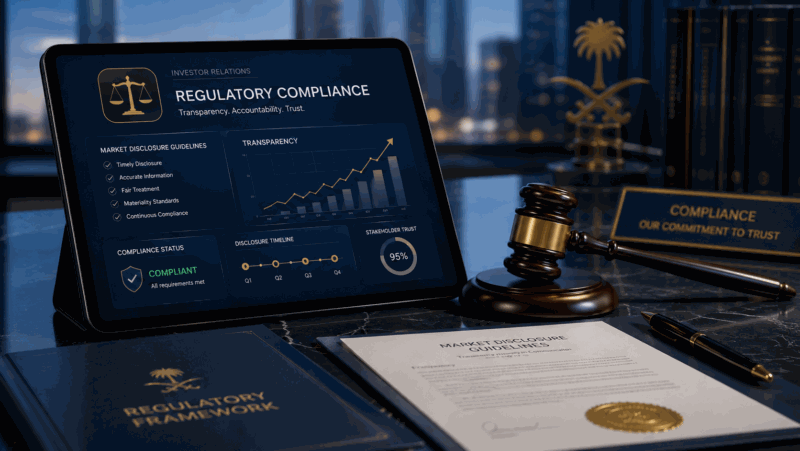
The Regulatory Framework for Investor Relations Disclosure Rules, the Limits of Communication, and the Prohibition on Selective Disclosure
First: Introduction
Investor relations operates within a strict regulatory framework. Unlike other communication functions, IR is governed by securities law that determines what may be said, to whom, and when. Breaching those rules is not merely poor practice; it can amount to a regulatory offense carrying severe penalties. Understanding the framework is not optional for an IRO — it is a professional necessity. In Saudi Arabia, the regulatory framework for IR rests on the Capital Market Law, the OSCO rules, the Corporate Governance Regulations, and the Market Conduct Regulations. These rules are not a burden but a protection: for the company against violations, for investors against selective disclosure, and for the market against manipulation. This article sets out the complete framework from a practical IR perspective.
Second: The Regulatory Sources
1. The Capital Market Law
- The highest-level framework (Royal Decree M/30).
- The Authority’s powers.
- Violations and penalties.
- The general framework for IR.
2. The OSCO Rules
- The most important for IR.
- Periodic and immediate disclosures.
- Requirements for issuances.
- The 2024-2025 amendments.
3. The Corporate Governance Regulations
- Shareholder rights.
- The general assembly.
- The annual board report.
4. The Market Conduct Regulations
- Prohibition of insider trading.
- Prohibition of manipulation.
- Untrue statements.
5. The Merger and Acquisition Regulations
- Particular communication rules during transactions.
- Specific requirements.
- Applying to the IRO.
Third: The Core Principles
1. Equal Access to Information
1.1 The Principle
The heart of IR regulation:
- All investors receive the same information.
- At the same time.
- At the same quality.
- Without discrimination.
1.2 Why
- A fair market.
- Investor confidence.
- Preventing exploitation.
- Fair pricing.
1.3 In Practice
- Disclosures through official channels.
- The IFSAH system, for everyone.
- The website.
- No private channels.
2. The Prohibition on Selective Disclosure
2.1 What It Is
Selective disclosure means:
- Providing material information.
- To some and not others.
- Before public disclosure.
- A serious violation.
2.2 The Risky Scenarios
- A one-on-one meeting with an analyst.
- A phone call with an investor.
- A conference attended by some funds.
- A roadshow.
2.3 The Golden Rule
- In private meetings: public information only.
- What is already in previous disclosures.
- No new material information.
- If something slips out, disclose immediately to everyone.
3. Timely Disclosure
3.1 The Principle
- As soon as the company becomes aware.
- Without unjustified delay.
- Usually within hours.
- Before any trading.
3.2 The Role of IR
- Rapid coordination.
- Drafting the disclosure.
- Approvals.
- Publication.
Fourth: What Can Be Said — Permitted Information
1. Published Public Information
1.1 Official Disclosures
- The financial statements.
- Annual reports.
- Immediate disclosures.
- On IFSAH.
1.2 Communicating on That Basis
- Explanation and interpretation.
- Answering questions.
- Providing context.
- Without new information.
2. Historical and Operational Information
2.1 What It Is
- Previously published performance.
- General operational information.
- Announced strategy.
- Not new material information.
2.2 It Can Be Shared
- In meetings.
- On roadshows.
- At conferences.
- Freely.
3. Context and Analysis
3.1 What It Is
- Interpreting published information.
- Connecting it to events.
- Sector context.
- Not new information.
3.2 It May Be Shared
- In every meeting.
- To deepen understanding.
- To enrich the discussion.
- It is part of the value of IR.
Fifth: What Cannot Be Said — Unpublished Material Information
1. Unannounced Earnings
1.1 The Example
- Quarterly results before the official announcement.
- Management estimates of earnings.
- Internal financial information.
1.2 The Risk
- Selective disclosure.
- Potential insider trading.
- A criminal offense.
2. Transactions Under Negotiation
2.1 The Examples
- A potential acquisition.
- A merger.
- The sale of major assets.
- A strategic partnership.
2.2 The Rule
- Complete confidentiality before disclosure.
- An insider list.
- Confidentiality agreements.
- No exceptions.
3. Management Changes Before Announcement
3.1 The Examples
- A CEO resignation.
- The appointment of a CFO.
- Changes to the board.
3.2 Managing It
- A restricted circle.
- Immediate disclosure once confirmed.
- Without leaks.
4. Material Operational Developments
4.1 The Examples
- Discoveries.
- A production halt.
- Major incidents.
- Significant legal disputes.
4.2 Managing It
- Immediate assessment.
- Disclosure if material.
- Without leaks.
Sixth: Insider Trading Rules
1. How They Apply to the IRO
1.1 The IRO Is a Material Insider
- By virtue of the position.
- With access to the information.
- All insider rules apply.
1.2 Personal Disclosures
- Of their own transactions.
- Within 5 business days.
- Through IFSAH.
- The same rules as board members.
2. Blackout Periods
2.1 Before Material Announcements
- Before quarterly and annual results.
- Around 30 days.
- No trading.
- Applying to the IRO and their family.
2.2 During Material Transactions
- M&A.
- Strategic developments.
- No trading until disclosure.
3. Not Passing on Information
3.1 To Whom
- Family.
- Friends.
- Colleagues with no need to know.
- Analysts or investors.
3.2 The Penalties
- Whether or not the recipient benefited.
- Whether or not they traded.
- A criminal offense.
- A chain of liability.
Seventh: Challenges in Daily Practice
1. One-on-One Meetings
1.1 The Request
- An investor asks for a meeting.
- With the IRO.
- To put questions.
1.2 Managing It
- Such meetings are permitted.
- Subject to the information rules.
- Documenting what was discussed.
- Without new material information.
1.3 The Difficult Questions
- “How is your quarter going?”
- “Will you meet expectations?”
- The answer: stay within what is published.
- Without signals or hints.
2. Earnings Calls
2.1 The General Rule
- The same information for everyone.
- Information published in the announcement.
- Published answers.
- No new material information.
2.2 Managing Questions
- Prepared scenarios.
- Prepared responses.
- No improvised answers that reveal information.
- “No comment” is acceptable.
3. Investment Conferences
3.1 What Makes Them Distinct
- Analysts and investors attending.
- One-on-one and group meetings.
- An intensive communication environment.
3.2 The Risks
- Information slipping out in the moment.
- Selective disclosure.
- Recent operational information.
3.3 Managing It
- Intensive preparation.
- Sticking to the prepared points.
- A written public presentation.
- Without improvisation.
4. Roadshows
4.1 What Makes Them Distinct
- A series of one-on-one meetings.
- In different cities.
- The same information in each.
- Without variation.
4.2 Managing It
- A single presentation.
- Prepared responses.
- Documentation.
- Consistency.
Eighth: Forward-Looking Information
1. The Definition
Forward-looking information means:
- Expectations.
- Future plans.
- Guidance.
- Not historical fact.
2. Permitted Formulation
2.1 Conservative Language
- “We expect.”
- “We plan.”
- “We aim.”
- Without categorical assurances.
2.2 Safe Harbor Language
- Legal cautions.
- Stating that the statements are forward-looking.
- That outcomes may differ.
- That they depend on risks.
2.3 The Assumptions
- Stating the material assumptions.
- The potential changes.
- Transparently.
3. Guidance
3.1 Characteristics
- Management estimates of future performance.
- Quarterly, annual, or multi-year.
- Optional in Saudi Arabia.
- A common practice internationally.
3.2 Advantages and Disadvantages
- Advantages: aligned expectations, lower volatility.
- Disadvantages: pressure, constrained flexibility, the risk of missing.
3.3 Updating It
- On a material change.
- Immediate disclosure.
- Without waiting for the quarter.
Ninth: Communicating During a Crisis
1. When It Is a Crisis
- A significant negative event.
- Rapid development.
- Intense media attention.
- Pressure on the share.
2. The Regulatory Rules in a Crisis
2.1 Immediate Disclosure Takes Priority
- As fast as possible.
- With accurate information.
- To control the narrative.
- To prevent rumors.
2.2 Holding to the Principles
- Equal access.
- No selectivity.
- No hints.
- Strict adherence.
2.3 Regular Updates
- As matters develop.
- Without delay.
- Transparently.
3. Rumors
3.1 Confronting Them
- A rapid response.
- With facts.
- Through official channels.
- Without confirming through further rumor.
3.2 Pre-emptive Disclosure
- Sometimes required.
- To prevent misinformation.
- Once the information is confirmed.
Tenth: Communication During Issuances
1. Quiet Periods
1.1 What They Are
- Before major issuances.
- Before an IPO.
- Before a secondary offering.
- With particular communication rules.
1.2 The Restrictions
- A minimum of communication.
- No promotion of the share.
- No statements that could be read as marketing.
- During defined periods.
1.3 What Is Permitted
- The information contained in the prospectus.
- And nothing beyond it.
2. The Issuance Roadshow
2.1 The Framework
- Meetings with investors.
- Before the offering.
- Under specific rules.
- With approved presentations.
2.2 The Rules
- Staying within the prospectus.
- Without additions.
- With documentation.
Eleventh: The IRO’s Personal Liability
1. Legal Liability
1.1 In the Event of a Breach
- Personal fines.
- A prohibition from working.
- A record of penalties.
- In serious cases: imprisonment.
1.2 Joint Liability
- With the company.
- With board members.
- The company is not a shield.
2. Insurance
2.1 D&O Insurance
- Liability insurance.
- For directors and officers.
- The IRO benefits.
- Financial protection.
2.2 The Limits
- It does not cover deliberate breaches.
- It does not cover criminal acts.
- It does cover negligence.
3. Self-Protection
3.1 Compliance
- With the rules precisely.
- Without exceptions.
- Without doubt.
3.2 Documentation
- Of every meeting.
- Of every call.
- Of every decision.
- A defensible record.
3.3 Seeking Advice
- Whenever in doubt.
- From legal counsel.
- Without hesitation.
Twelfth: Internal Policies
1. The Disclosure Policy
1.1 The Content
- The types.
- The timings.
- The approvals.
- The channels.
1.2 Application
- To everyone.
- With training.
- With periodic review.
2. The Communication Policy
2.1 The Content
- Who speaks to investors.
- The authorized spokespeople.
- What may be said.
- Contact protocols.
2.2 The Authorized Spokespeople
- CEO, CFO, IRO.
- Within their remit.
- Everyone else: no contact without approval.
3. The Social Media Policy
3.1 The Rules
- For employees.
- No disclosure.
- No discussion of internal information.
- No opinions about the share.
3.2 For the Company
- Official accounts.
- Within the disclosure rules.
- With approvals.
4. The Personal Trading Policy
4.1 The Content
- For board members, executives, employees.
- Blackout periods.
- Prior approvals.
- Disclosures.
4.2 Application
- Strictly.
- Without exceptions.
- With oversight.
Thirteenth: Training and Culture
1. Training Management
1.1 The Content
- Disclosure rules.
- Insider trading.
- Communication with the market.
- Practical cases.
1.2 The Frequency
- For new joiners on appointment.
- Annually for everyone.
- On any update.
2. Training Employees
2.1 The Basics
- What material information is.
- Who not to speak to.
- Where to refer enquiries.
2.2 The Specialized
- For the IR team.
- For finance.
- For legal.
3. Culture
3.1 The Example From the Top
- The CEO, the board.
- A clear commitment.
- Respect for the rules.
3.2 Continuous Communication
- Periodic reminders.
- Case studies.
- Updates.
Fourteenth: Common Challenges
1. The “Directed Hint” Challenge
Implying without stating outright:
- The fix: neutral language.
- Staying with published information.
- “No comment” is acceptable.
2. The “Difficult Questions” Challenge
Questions about internal figures:
- The fix: prepared responses.
- Directing to what is published.
- Without disclosing.
3. The “Private Meetings” Challenge
Pressure to provide additional information:
- The fix: strict adherence.
- No exceptions.
- A culture of equal treatment.
4. The “Crisis” Challenge
Pressure to communicate before the information is confirmed:
- The fix: order the priorities.
- Confirm before disclosing.
- But do it quickly.
Fifteenth: Best Practices
1. At the Level of Knowledge
- Deep understanding: of the regulatory framework.
- Continuous updating: on amendments.
- Legal advice: whenever in doubt.
- Training: regularly.
2. At the Level of Practice
- Strict adherence: without exceptions.
- Care: in every interaction.
- Documentation: of every step.
- Review: before publication.
3. At the Level of Culture
- The example: from the top.
- Communication: continuous.
- No tolerance: for breaches.
- Respect: for the rules.
4. At the Level of Defense
- Comprehensive policies: kept current.
- D&O insurance: sufficient.
- Legal counsel: capable.
- Documentation: professional.
Conclusion
The regulatory framework for investor relations is not a constraint but a protection — for the company against violations, for investors against selective disclosure, and for the market against manipulation. Strict adherence builds trust, protects reputation, and sustains the business. Laxity, even where it succeeds temporarily, accumulates risk that can detonate at any moment. A professional IRO in the Saudi capital market knows the framework deeply, applies it rigorously, and builds a culture of compliance in their team and their company. As the market has developed and regulation has tightened in recent years, the risks have grown and the penalties have become more severe. Investing in understanding the framework, in training, and in internal policies is not optional but necessary. Companies that master this build a strong professional reputation, attract investors, and grow safely.
Contact Us
References and Sources
- The Capital Market Law (Royal Decree M/30).
- Rules on the Offer of Securities and Continuing Obligations (OSCO) — 2024-2025 amendments.
- The Corporate Governance Regulations.
- The Market Conduct Regulations.
- The Merger and Acquisition Regulations.
- The Regulations on Inspection and Investigation Procedures.
- SEC Regulation FD (international reference).
- EU Market Abuse Regulation (international reference).
- NIRI Guidelines on Communication Practices.
- CFA Institute — Communication with Investors Standards.
FAQ
What is the fundamental principle governing investor relations communication with the market?
Equal access to information. Material information must be made available to all investors at the same time, at the same quality, through official channels, with no selective disclosure to one group ahead of another.
Why is hinting at performance a legal risk?
Because a directed hint is treated in law as a disguised form of selective disclosure. It shifts market expectations unfairly on the basis of information that has not been published, which can expose both the company and the IRO to regulatory liability.
What is a blackout period, and how does it apply to investor relations staff?
It is the period preceding the announcement of material financial results — typically 30 days — during which insiders, including IR staff with access to the information, are prohibited from trading in the company's shares or passing inside information to others.