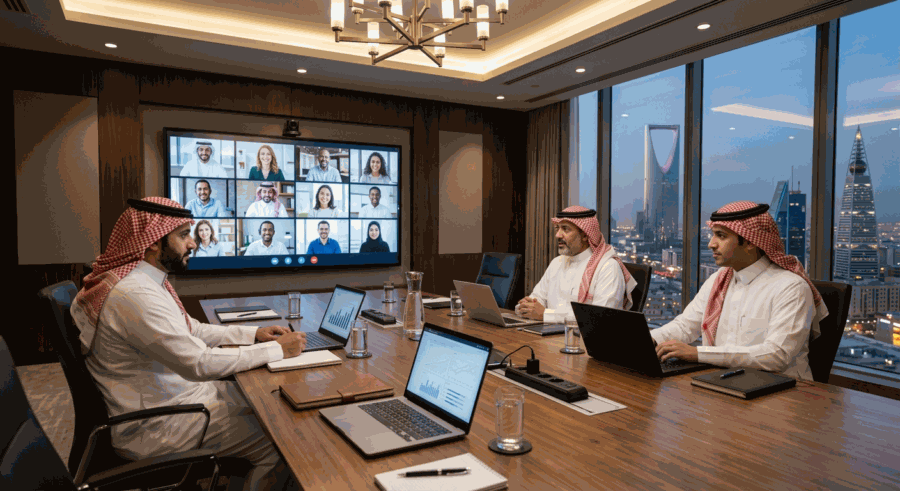
Information Security in Virtual Meetings

Information Security in Virtual Meetings Encryption, Permissions, Document Protection, and Cyber Threats
First: Introduction
Virtual meetings carry the most sensitive information in the company across networks that may not be entirely secure. Board decisions, competitive strategies, undisclosed financial data, employee discussions, all may be on screen. A single board meeting breach may cost the company millions of riyals, tip market balances, or reveal confidential information to competitors. Cybersecurity for meetings is no longer a luxury but an existential necessity. In the Saudi regulatory framework, the Personal Data Protection Law, the National Cybersecurity Authority, and Capital Market Authority requirements all impose strict standards on information protection. But cybersecurity is not only regulatory compliance, but protection of the company’s essence. This article reviews threats, protection methods, best practices, and special considerations for board and committee meetings.
Second: Major Threats
1. Meeting Breach
1.1 What It Is
Unauthorized entry into the meeting:
- “Zoombombing” — invasion by someone without invitation.
- Attacker entering as a member.
- Eavesdropping on the meeting.
1.2 Breach Methods
- Link leakage.
- Link guessing.
- Social engineering.
- Member account hacking.
1.3 Consequences
- Information leakage.
- Meeting disruption.
- Commercial use of information.
- Reputation damage.
2. Leakage of Recordings and Documents
-
Meeting recordings spread.
-
Confidential documents leak.
-
Written summaries.
3. Device Hacking
- Hacking a member’s computer.
- Access to stored documents.
- Eavesdropping via microphone.
- Surveillance via camera.
4. Account Hacking
- Password theft.
- Use of weak password.
- Phishing attacks.
- Password reuse.
5. Platform Breach
- Security vulnerabilities in the platform.
- Attacks on service provider.
- Advanced persistent threats (APT).
- Zero-day exploits.
6. Internal Threats
- Dissatisfied employee.
- Intentional leakage.
- Intentional breach.
- Hard to detect.
7. Social Engineering
- Impersonating a member.
- Deceiving technical support.
- Fraudulent calls.
- Fake email.
Third: Basic Protection Procedures
1. For the Platform
1.1 Choosing a Secure Platform
Selection criteria:
- End-to-end encryption.
- Certified security certificates.
- Usage logs.
- Regular security updates.
- Platform’s reputation in security.
1.2 Security Settings
- Adopt encryption.
- Waiting room.
- Lock the meeting.
- Restrict participation.
- Prevent recording (if needed).
1.3 Updates
- Always update the platform.
- Apply security patches immediately.
- Monitor versions.
- Avoid old versions.
2. For Each Meeting
2.1 Unique Link
- No link reuse.
- New link for each meeting.
- Random generation.
- No guessable numbers.
2.2 Passwords
- Password for each meeting.
- Complex (letters, numbers, symbols).
- Sent through channel separate from link.
- Not shared.
2.3 Waiting Room
- Verify identity of entrant.
- Prevent automatic entry.
- Facilitator’s decision to accept each member.
2.4 Locking the Meeting
- After everyone enters.
- Prevent any subsequent entry.
- In sensitive meetings.
3. For Participants
3.1 Two-Factor Authentication (2FA)
- For account access.
- For platform access.
- For document access.
- Additional protection layer.
3.2 Strong Passwords
- 12+ characters.
- Mix of letters, numbers, symbols.
- No repetition.
- No personal information.
- Password manager.
3.3 Personal Updates
- Updated operating system.
- Updated browser.
- Antivirus software.
Fourth: Document Protection
1. Secure Storage
1.1 Specialized Platforms
Not regular email:
-
Diligent Boards.
-
Secure company platforms.
-
SharePoint with security settings.
1.2 Encryption
- Encryption of stored documents.
- Encryption during transmission.
- Securely managed keys.
1.3 Access Permissions
- Each member their permissions.
- Need-to-know principle.
- Track who saw what.
- Revoke permissions after end.
2. Prevent Download and Print
2.1 View Only
- Document is displayed, not downloaded.
- No copying, no saving, no printing.
- Visible watermarks.
2.2 Protection from Screenshots
- Screenshot prevention technologies.
- Dynamic watermarks.
- Screenshot tracking.
- Not full protection but deterrent.
3. Access Tracking
-
Log of who opened each document.
-
How long.
-
Whether attempted download.
-
Periodic review.
4. Document Withdrawal
After the meeting:
- Withdraw access.
- Delete local copies.
- Verify non-retention.
- In very sensitive cases.
Fifth: Recording and Capturing
1. Recording Policy
1.1 Participant Consent
- Inform before recording.
- Obtain consent.
- Document consent.
- Legal commitment.
1.2 Purpose of Recording
- Specific necessity.
- Not random.
- Document the purpose.
- Limited use.
1.3 Retention Period
- Specified in the policy.
- Not permanent.
- Deletion after end.
2. Protecting Recordings
- Encrypted storage.
- Limited access.
- Access log.
- One backup copy.
- No copies on personal devices.
3. Preventing Unauthorized Recording
- Disable recording in the platform.
- Alert participants.
- Penalty policy.
- Detection of hidden recording is difficult.
4. Screenshots
- Policy preventing screenshots.
- Alert participants.
- Protection technologies (limited).
- Build culture of respect.
Sixth: Physical Environment
1. The Place Where You Sit
1.1 Privacy
- Closed room.
- Without passersby.
- Conversation can’t be heard from outside.
- No windows revealing the screen.
1.2 Security
- Away from external microphones.
- Away from smart devices (if possible).
- Environmental awareness.
- Away from public places.
2. Smart Devices
2.1 Risks
- Smart speakers listen continuously.
- Smart watches record.
- Phones may be compromised.
- Home security cameras.
2.2 Procedures
- Turn off smart speakers.
- Remove smart watches.
- Phone away or off.
- No devices you don’t need.
3. Avoid Public Places
- No meetings in cafes.
- No meetings in airports.
- No public Wi-Fi networks.
- Use VPN if you must.
Seventh: Network and Connection
1. Secure Network
1.1 From Home
- Wi-Fi protected with strong password.
- Updated home network.
- Secure router.
- Separate network for guests.
1.2 From Office
-
Secure company network.
-
Cyber monitoring.
-
Security updates.
1.3 Travel
- VPN always.
- Avoid public Wi-Fi.
- Personal cellular connection.
- Protected internet passport.
2. VPN
- For travel.
- For untrusted networks.
- Company-approved VPN.
- Connection encryption.
3. Firewall
- On your device.
- On your network.
- Prevent intrusion.
- Monitor traffic.
Eighth: Security for Participants
1. Qualifying Members
1.1 Training
- Cybersecurity courses.
- Safe practices.
- Awareness of threats.
- Periodic training (annually at least).
1.2 Guidance
-
Written rules.
-
Easy to follow.
-
Always available.
2. Incident Response
2.1 Response Plan
- What to do upon suspecting a breach.
- Contact party (cybersecurity team).
- Immediate steps.
- Formal reporting.
2.2 Quick Reporting
- Immediate reporting of any suspicion.
- Without waiting.
- Without fear of punishment.
- Culture of cooperation.
3. Personal Device Security
3.1 Requirements
-
Updated operating system.
-
Personal firewall.
-
Hard drive encryption.
-
Encrypted backups.
3.2 Separation between Personal and Professional
- Device for work, device for personal.
- No mixing of accounts.
- No professional files on personal.
- In large companies: device provided by company.
Ninth: Regulatory Requirements
1. Saudi Regulatory Framework
1.1 National Cybersecurity Authority
Basic Cybersecurity Controls:
- Data protection controls.
- Cybersecurity controls for sensitive systems.
- Electronic communications controls.
- Full compliance.
1.2 Personal Data Protection Law
- Protection of personal data.
- Disclosure and consent requirements.
- Data subjects’ rights.
- Penalties for violations.
1.3 Capital Market Authority
- Protection of substantive information.
- Prevention of insider trading.
- Disclosure requirements.
1.4 Saudi Central Bank
For banks and financial institutions:
- Cybersecurity framework for banks.
- Strict requirements.
- Regular tests.
- Periodic audit.
2. International Standards
- ISO 27001 — Information security management.
- NIST Cybersecurity Framework.
- SOC 2.
- GDPR (for companies with European business).
3. Compliance
3.1 Institutional Framework
- Information security policy.
- Cybersecurity committee.
- Chief Information Security Officer (CISO).
- Periodic audit.
3.2 Documentation
- Incident reports.
Tenth: Special Cases
1. Board Meetings
1.1 Sensitivity
One of the most sensitive meetings:
- Competitive strategies.
- Pre-disclosure financial data.
- Mergers and acquisitions.
- Insider information.
1.2 Strict Procedures
- Platforms dedicated to boards.
- End-to-end encryption.
- Strict identity verification.
- No recording.
- Precise access logs.
2. Audit Committee Meetings
- Sensitive financial information.
- Discussions with auditor.
- Related party transactions.
- Strict protection.
3. M&A Meetings
- Highest levels of confidentiality.
- Dedicated acquisition committee.
- External advisors.
- Extensive confidentiality agreements.
4. Crisis Meetings
- Very sensitive information.
- Time pressure.
- Strict security despite speed.
- Fine balance.
Eleventh: Common Challenges
1. “Convenience vs. Security” Challenge
Security procedures slow things down:
- Solution: balance.
- Simplify procedures as much as possible.
- Appropriate tools (password manager).
- Training to speed up procedures.
2. “Negligence” Challenge
Some members ignore security:
- Solution: continuous awareness.
- Role model from the top.
- Individual responsibility.
- Strict policies.
3. “Cost” Challenge
Security systems are expensive:
- Solution: compare cost to breach cost.
- Long-term investment.
- Dedicated budget.
- Strategic priority.
4. “Continuous Evolution” Challenge
Threats evolve faster than protection:
-
Solution: continuous monitoring.
-
External experts.
-
Periodic penetration tests.
Twelfth: Security Checklist
1. Before the Meeting
- Is the platform secure and updated?
- Has a unique link been created?
- Is the password strong and sent through separate channel?
- Are security settings activated?
- Is the waiting room activated?
2. During the Meeting
- Have entrants’ identities been verified?
- Has the meeting been locked?
- Is the environment secure for each participant?
- Is recording (if requested) with everyone’s consent?
3. After the Meeting
- Has access to sensitive documents been withdrawn?
- Has the recording been deleted (if not needed)?
- Have procedures been documented?
- Have any incidents been evaluated?
Thirteenth: Best Practices
1. At the Strategy Level
- Security as priority: from the top.
- Sufficient investment: in technology and qualification.
- Comprehensive policies: and updated.
- Regulatory compliance:
2. At the Technology Level
- Certified platforms: and reliable.
- Encryption: end-to-end.
- Strong authentication: two-factor or multi-factor.
- Updates:
3. At the Individual Level
- Training: periodic and comprehensive.
- Awareness:
- Sound practices:
- Reporting: immediate upon suspicion.
4. At the Culture Level
- Security culture: in every decision.
- Seriousness: in application.
- Cooperation: among everyone.
- Continuous development: of systems.
Conclusion
Information security in virtual meetings is collective responsibility. Secure technology is necessary but not sufficient. Sound behaviors are necessary but not sufficient. The regulatory framework is necessary but not sufficient. All these layers integrate to build multi-dimensional protection. A single breach may cost the company millions, so investing in cybersecurity is not optional but necessary. Leading Saudi companies, especially those listed on Tadawul, adopt the highest cybersecurity standards for virtual meetings. This commitment protects shareholders, preserves substantive information, and builds trust with markets. The Saudi regulatory framework — from the National Cybersecurity Authority to the Personal Data Protection Law — provides a clear framework for compliance. Implementing this framework seriously, investing in technology and qualification, and building a culture of security, is an investment in the company’s future. Every secure meeting is a brick in protecting the company’s strategic entity.
References and Sources
- National Cybersecurity Authority — Essential Controls.
- Saudi Personal Data Protection Law.
- Capital Market Authority — Information Protection Requirements.
- Saudi Central Bank — Cybersecurity Framework for Banks.
- ISO 27001 — Information Security Management.
- NIST Cybersecurity Framework.
- Microsoft Security Best Practices.
- Zoom Security Whitepaper.
- Diligent — Board Cybersecurity.
- Deloitte — Virtual Meeting Cybersecurity Guide.
FAQ
What are the most significant cybersecurity threats in virtual meetings and how are they prevented?
Seven threat categories target virtual meetings. Meeting infiltration — Zoombombing and unauthorized entry through guessed or leaked links, social engineering, or compromised member accounts — is prevented by unique random-generated links for every meeting, complex passwords sent through a separate channel from the link, waiting rooms requiring the host to manually admit each attendee, and locking the meeting once all participants are in. Recording and document leakage through forwarded recordings, leaked documents, screenshots, or written summaries is addressed through strict recording policies with explicit consent, view-only document access without download capability, dynamic watermarks, and access withdrawal immediately after the meeting. Device hacking giving attackers access to stored documents and microphone or camera surveillance is mitigated through updated operating systems, antivirus software, hard drive encryption, and separating professional from personal devices. Account hacking through phishing, weak passwords, and credential reuse is addressed by two-factor or multi-factor authentication for all platform access, password managers generating twelve-plus character complex passwords, and phishing awareness training. Platform vulnerabilities require selecting platforms with end-to-end encryption, certified security, active update schedules, and strong security reputations. Internal threats from dissatisfied employees require access logging, need-to-know permission structures, and security culture from leadership. Social engineering through impersonation and fraudulent communications requires training members to verify identities through established channels.
How should board meeting documents be protected in virtual environments?
Document protection operates across four layers. Secure storage on dedicated board platforms — Diligent Boards, BoardEffect, Nasdaq Boardvantage, Convene — rather than regular email or general file sharing services, with encryption both at rest and in transit and security-managed keys. Access permissions structured on the need-to-know principle: each member receives only the permissions relevant to their role, with tracking of who accessed what and when, and automatic revocation of permissions after the meeting concludes. Prevention of download and print through view-only document display that prevents copying, saving, or printing, combined with visible watermarks and where technically available screenshot prevention that at minimum deters unauthorized capture through dynamic watermarks that identify the viewer in any captured image. Access tracking logs that record who opened each document, at what time, for how long, and whether any download was attempted, with periodic review by the security officer. Board meetings warrant the strictest document protection because they typically carry competitive strategies, pre-disclosure financial data, merger and acquisition information, and insider information — all of which fall under Capital Market Authority requirements for substantive information protection and the Saudi Personal Data Protection Law. Board meetings are generally not recorded: sensitive discussions, individual opinions, and disagreements are better captured in professional minutes than in an audio-visual record that may limit candor.
What Saudi regulatory requirements apply to virtual meeting cybersecurity and what are best practices for compliance?
Four regulatory frameworks govern virtual meeting security for Saudi organizations. The National Cybersecurity Authority Essential Controls set baseline data protection requirements, cybersecurity controls for sensitive systems, and electronic communications controls — full compliance is mandatory. The Saudi Personal Data Protection Law requires protection of personal data, disclosure and consent obligations, and data subjects' rights enforcement. The Capital Market Authority requires protection of substantive information, prevention of insider trading, and specific disclosure obligations for listed companies — board meetings discussing pre-disclosure information carry the highest sensitivity. The Saudi Central Bank imposes a cybersecurity framework with strict requirements, regular penetration tests, and periodic audits for banks and financial institutions. International standards providing additional frameworks include ISO 27001 for information security management, the NIST Cybersecurity Framework, and GDPR for companies with European operations. Institutional compliance requires a formal information security policy, a cybersecurity committee or designated Chief Information Security Officer, periodic external audits, and complete documentation of policies, procedures, records, and incident reports. The most important compliance insight is that technology alone is insufficient — the weakest point in cybersecurity is consistently human behavior. A secure platform with strong encryption is defeated by a member clicking a phishing link, sharing a password, or attending a sensitive meeting from a café with public Wi-Fi. Periodic training at least annually, written rules that are easy to follow, an immediate incident reporting culture without fear of punishment, and security leadership from the boardroom down are the non-technical requirements that make technical measures effective.