Meeting Etiquette

Meeting Etiquette For In-person and Virtual Meetings, with Saudi Cultural Considerations
First: Introduction
Meeting etiquette is not social pretension, but an effective tool for influence and relationship building. The leader who masters meeting etiquette earns colleagues’ respect, builds strong relationships, and increases their influence. The leader who neglects this etiquette — however technically competent — loses valuable opportunities. In sensitive meetings, a small detail in etiquette may make a big difference in the outcome. In Saudi and Gulf culture, etiquette acquires significant importance. Islamic values and Arab traditions give special attention to respect, deference, and relationship building. These values are manifested in every meeting detail: reception, welcome, conversation, listening, parting. In virtual meetings, etiquette requires adaptation to the new medium. This article reviews basic etiquette in in-person and virtual meetings, with focus on Saudi cultural considerations.
Second: Pre-Meeting Etiquette
1. Arriving on Time
1.1 The Rule
- Arrive 5-10 minutes before scheduled time.
- Not late even by a minute.
- Not too early (15+ minutes).
- Respect for everyone’s time.
1.2 If You Are Late
- Prior notification if possible.
- Apologize upon entering.
- Without long explanation.
- Join quietly.
1.3 Symbolism of Timing
Repeated lateness:
- Says “My time is more important than yours”.
- Loses respect.
- Weakens influence.
- Reflects on professionalism.
2. Appearance
2.1 Clothing
- Clothing appropriate to meeting level.
- Formal attire for important meetings.
- Saudi traditional dress is respected and appropriate.
- Cleanliness and elegance.
2.2 Knowing the Rules
- Formal attire for formal meetings.
- Semi-formal for internal meetings.
- Casual for small meetings.
- When in doubt, more formal is better.
3. Preparation
3.1 Substantive Readiness
- Read the documents.
- Know the agenda.
- Prepare questions.
- Know the attendees.
3.2 Equipment
- Writing tools.
- Computer/tablet (if needed).
- Business cards.
Third: Reception and Welcome Etiquette
1. Welcome
1.1 Traditional Phrases
- “As-salamu alaykum wa rahmatu Allah wa barakatuh”.
- Respond similarly or better.
- “Ahlan wa sahlan”.
- “Hayyakum Allah”.
1.2 Handshake
- Men with men — firm but not harsh handshake.
- Women with women — gentle handshake.
- Between genders — wait for whoever initiates, some women prefer not to shake.
- Respect personal choice.
1.3 Asking About Wellbeing
In Saudi culture, asking about wellbeing is essential:
- “How are you?”
- “How is the family?” (for known people).
- “Alhamdulillah” as general response.
- Not intrusion but respect.
2. Introductions
2.1 Self-Introduction
- Introduce yourself clearly.
- Name, title, company.
- Business card.
- Quick reference to background.
2.2 Introducing Others
Order of introduction:
- The senior or higher in rank is introduced to.
- “Mr. Ahmed, allow me to introduce Mr. Mohammed, Vice President…”
- Respect for hierarchy.
2.3 Remembering Names
- Effort to remember names.
- Use name in conversation.
- Apologize politely if you forget.
- Effort to learn correct pronunciation.
3. Seating
3.1 Respect for Order
- Wait for host’s signal.
- Sit in designated place.
- Respect seating protocol.
3.2 Formalities
- The senior sits first (in some cases).
- Wait for seating to begin.
- Sit respectfully.
Fourth: Hospitality Etiquette
1. Dealing with Hospitality
1.1 Accepting Coffee
Arabic coffee has special status:
- Accepting it indicates acceptance and respect.
- Shaking the cup when finished means “enough”.
- Usually 3-5 cups.
- Holding the cup with the right hand.
1.2 Dates and Sweets
- Traditional acceptance of dates.
- Eating in moderation.
1.3 Meals
In long meetings:
- Dealing politely with food.
- Not over-indulging.
- Respecting others’ customs.
- Thanks to the host.
2. Eating Etiquette
2.1 General
- Start eating with “Bismillah”.
- Eating with the right hand.
- Not talking with mouth full.
- Finishing with “Alhamdulillah”.
2.2 Respecting Preferences
- Some Muslims fast on certain days.
- Food allergies.
- Personal preferences.
- Health needs.
3. Hosting Etiquette (If You Are Host)
- Warm welcome.
- Generous hospitality.
- Considerate of everyone.
- Attention to comfort.
Fifth: Speaking Etiquette
1. When to Speak
1.1 Waiting Your Turn
- Not interrupting.
- Wait until the speaker finishes.
- Ask permission to speak.
- Respect rhythm.
1.2 Body Signals
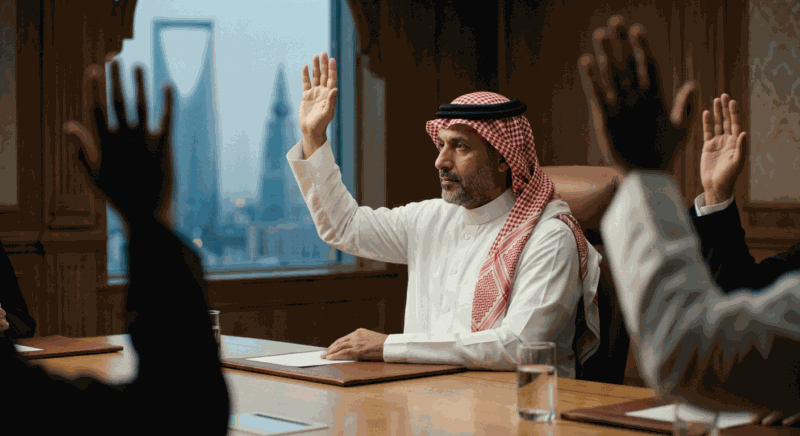
- Slight hand raise.
- Eye contact with meeting chair.
- Look at speaker.
- Agreement signals (head nod).
2. How to Speak
2.1 Tone
- Calm and professional tone.
- Without emotion.
- Without raising voice.
- Without mockery.
2.2 Content
- Main point first.
- Supporting evidence.
2.3 Respect for Others
- Not questioning intentions.
- Not attacking.
- Use “we” instead of “I”.
- Acknowledge others’ contributions.
3. Titles and Address
3.1 Formal Titles
- “His Excellency” for ministers and similar.
- “His Highness” for senior officials.
- “Doctor” for PhD holders.
- “Professor” for respected people.
- “Engineer” for engineers.
3.2 Respect for Titles
- Use correct title.
- Not “O Ahmed” for the senior.
- Perhaps “Abu Mohammed” for the older in old relationship.
- Avoid excessive pretension.
3.3 “Brother” and “Sister”
- Common use as respect.
- “Brother Ahmed”.
- “Sister Fatima”.
- Sign of respect and closeness.
4. What to Avoid
- Fruitless argument.
- Excessive colloquial.
- Inappropriate words.
- Humor at someone’s expense.
- Pointing at people.
- Talking about sensitive personal matters.
Sixth: Listening Etiquette
1. Active Listening
1.1 Signs
- Eye contact.
- Head nodding in agreement (without exaggeration).
- Leaning slightly forward.
- Signals of importance of what is said.
1.2 Full Focus
- Without preoccupation with other things.
- Without looking at phone.
- Without preparing response before speaker finishes.
- Full embrace of what is said.
2. Responding to What Was Said
2.1 Appropriate Response
- Acknowledge what was said.
- Link to your idea.
- “Based on what Dr. Ahmed said…”
- Respect the contribution.
2.2 Not Ignoring What Was Said
- Response, not ignoring.
- Even if you don’t agree.
- Acknowledgment then disagreement.
3. Dealing with Disagreement
- Disagreement in opinion is not hostility.
- “I appreciate your view, but…”
- Focus on the issue, not the person.
- Respect the right to disagree.
Seventh: Body Language
1. Positivity
- Straight posture.
- Leaning toward speaker.
- Eye contact.
- Moderate smile.
- Agreement gestures.
2. What to Avoid
-
Crossed arms (indicates closure).
-
Looking at watch frequently.
-
Sitting far away.
-
Looking away.
-
Offensive gestures.
3. Personal Distance
- Respect the distance.
- Not too close.
- Not too far.
- Distance in Arab culture is less than Western.
4. Eye Contact
- Moderate, not staring.
- Indicates interest.
- Respect cultural differences.
- With speaker and with audience.
Eighth: Phone and Device Etiquette
1. The Golden Rule
- Phone off or silent.
- Away from the table (in bag).
- Don’t follow notifications.
- Don’t answer calls.
2. Exceptions
- Real emergency call (prior notification).
- Leave to answer quietly.
- Return quickly.
3. Computer/Tablet
For documents and notes only:
- Not for email.
- Not for browsing.
- Not for work messages.
- Focus on the meeting.
4. The Silent Message
Using devices in the meeting:
- Says “You are not my priority”.
- Loses respect.
- Weakens influence.
- Reflects negatively.
Ninth: Virtual Meeting Etiquette
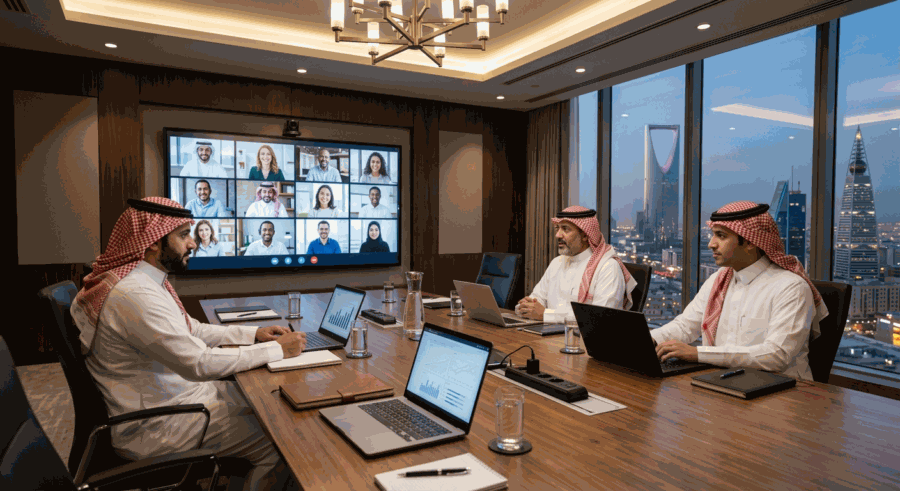
1. Camera
1.1 Turn It On
- Camera on in most cases.
- Eye contact is important.
- Exceptions for valid reasons (prior notification).
1.2 Camera Position
- At eye level.
- Not from below (face looks distorted).
- Good lighting.
- Appropriate background.
1.3 Appearance
- Appropriate clothing (from waist up).
- Even at home.
- Clean and tidy.
- Respect for meeting level.
2. Microphone
2.1 Muting
- Mute microphone when not speaking.
- Prevent background noise.
- Respect for attendees.
2.2 Unmuting
- Unmute when intervening.
- Verify unmute.
- “Can you hear me?” (once).
3. Environment
- Quiet place.
- No interruptions (children, pets).
- Close doors.
- Inform family of need for quiet.
4. Attention
4.1 Focus
- Full focus.
- Without other tasks.
- Without reading email.
- Without eating in camera.
4.2 Signals
- Use “raise hand” instead of interruption.
- Use “reactions” moderately.
- Chat for side questions.
5. Privacy
- No screenshots.
- No hidden recording.
- Respect for meeting confidentiality.
Tenth: Saudi Cultural Considerations
1. Respect for Age and Status
1.1 The Elder
- Extreme respect.
- Listening with interest.
- Not interrupting.
- Benefit from their experience.
1.2 The Higher in Status
- Respect for position.
- Listening first.
- Speaking with politeness.
- Respect for authority.
2. Prayer Times
2.1 Respect
- Know prayer times.
- Break at prayer time.
- Provide place for prayer.
- No meeting during prayer.
2.2 Planning
- Schedule meetings between prayers.
- Sufficient break for prayer (15-20 minutes).
- Know annual times.
3. Ramadan Month
3.1 Respect
- Meetings during times of those fasting.
- No eating in front of those fasting.
- Respect for energy drop.
- Shorter meetings.
3.2 Adaptation
- Schedule in morning.
- Or after Iftar.
- Avoid Suhoor time.
- Respect for traditions.
4. Mixed Meetings
4.1 Respect and Professionalism
- Mutual respect.
- Professional communication.
- Adherence to etiquette.
- Focus on work.
4.2 With Both Genders
- Respect for personal preferences.
- Standards of professionalism.
- Clear boundaries.
- Focus on competence.
5. Polite Phrases
5.1 Positive Phrases
- “Barak Allah feek” (May Allah bless you).
- “Jazak Allah khairan” (May Allah reward you well).
- “Ya’tik al-afiyah” (May Allah give you health).
- “Allah yuwaffiqak” (May Allah grant you success).
5.2 Apology
- “Asif” or “Othran” (sorry).
- “Ma’thirah” (excuse me).
- “Without intention”.
5.3 Thanks
- “Shukran jazilan” (thank you very much).
- “Ya’tik al-afiyah”.
- “Kathar Allah khairak” (may Allah multiply your good).
Eleventh: Closing and Departure Etiquette
1. The Closing
- Wait for formal end.
- No early departure (except for necessity and with permission).
- Thank the facilitator.
- Thank the attendees.
2. Farewell
2.1 The Greeting
- “As-salamu alaykum”.
- “Fi aman Allah” (in Allah’s protection).
- “Ila al-liqa’” (until we meet).
2.2 Handshake
- Farewell to host first.
- The senior in status.
- Then colleagues.
3. After Departure
3.1 Thanks
- Thank-you message to host.
- Especially after important meetings.
- Quick (same day).
- Personal and brief.
3.2 Follow-up
- Execute what was agreed.
- Contact after a period.
- Build the relationship.
Twelfth: Common Challenges
1. “Cultural Differences” Challenge
In international meetings:
-
Know the cultures.
-
Respect differences.
-
Continuous learning.
2. “Embarrassing Situations” Challenge
Unexpected situations:
- Polite behavior.
- Don’t worsen the situation.
- Gentle humor (with caution).
3. “Dealing with Rudeness” Challenge
Someone breaching etiquette:
- Don’t respond in kind.
- Maintain respect.
- Focus on the issue.
- Side conversation if needed.
4. “Distraction” Challenge
Internal interruptions:
- Focus on speaker.
- Ignore interruptions.
- Later handling.
- Respect for rhythm.
Thirteenth: Etiquette of Post-Meeting Communication
1. Thank-you Messages
2. Following up on Tasks
- Commitment to what you promised.
- Regular communication.
- Transparency in progress.
- Respect for deadlines.
3. Building Relationships
- Communication outside meetings.
- Personal interest.
- Remembering occasions.
- Communication on occasions.
Fourteenth: Etiquette Checklist
1. Before the Meeting
- Did you arrive on time?
- Is your clothing appropriate?
- Are you prepared?
- Is your phone off?
2. During the Meeting
- Do you listen with interest?
- Do you respect everyone?
- Is your body language positive?
- Do you avoid interruptions?
3. When Intervening
- Do you wait your turn?
- Do you speak politely?
- Do you respect others?
- Are you brief?
4. After the Meeting
- Did you say goodbye to everyone?
- Did you thank the host?
- Are you executing tasks?
- Are you following up on relationships?
Fifteenth: Best Practices
1. At the Self Level
- Professionalism: in every detail.
- Respect: for everyone.
- Commitment: to etiquette.
- Continuous self-development.
2. At the Culture Level
- Respect for local culture.
- Openness to other cultures.
3. At the Influence Level
- Building professional reputation.
- Earning respect.
- Building relationships.
- Increasing influence.
4. At the Leadership Level
- Role model: for everyone.
- Teaching others: by example.
- Building etiquette culture: in the company.
- Preserving authentic:
Conclusion
Meeting etiquette is not secondary detail, but the essence of professional relationships. The leader who masters this etiquette builds strong relationships, earns respect, and increases their influence. The leader who neglects them loses opportunities that may not return. In a world where cultures intersect and relationships intertwine, mastering etiquette becomes an indispensable leadership skill. In the Saudi and Gulf context, where Islamic values and Arab traditions place respect and honor at the heart of professional life, etiquette acquires double importance. The leader who combines professional competence with refined etiquette becomes a model to emulate. Investing in developing one’s etiquette, teaching it to coming generations, and instilling it in company culture, is an investment in professional identity and institutional reputation. Meeting etiquette is the silent language that expresses who you are before you speak, and remains in memory after the words end.
References and Sources
- Saudi Business Etiquette and Protocol Guides.
- Gulf Cooperation Council Business Practices.
- International Protocol Officers Association.
- Harvard Business Review — Cross-Cultural Business Etiquette.
- ICSA — Professional Conduct in Meetings.
- Emily Post Institute — Business Etiquette.
- Letitia Baldrige’s New Complete Guide to Executive Manners.
- Erin Meyer — The Culture Map.
- Saudi Vision 2030 — Cultural Values in Business.
- Islamic Business Ethics and Etiquette Studies.
FAQ
What are the most important meeting etiquette rules in Saudi professional culture?
Meeting etiquette in Saudi and Gulf culture reflects Islamic values and Arab traditions where respect, deference, and relationship building are central to every professional interaction. Several rules carry particular weight. Punctuality — arriving five to ten minutes before the scheduled time signals respect; repeated lateness communicates that your time is more valuable than your colleagues' and directly weakens your professional influence. The welcome ritual follows a specific sequence: the greeting begins with "As-salamu alaykum wa rahmatu Allah wa barakatuh" with a response of equal or greater warmth, followed by "Ahlan wa sahlan," then genuine inquiry about wellbeing — "How are you? How is the family?" — which in Saudi culture is not intrusion but a fundamental expression of respect. Handshake etiquette requires a firm but not harsh grip between men, a gentle one between women, and when crossing genders the correct practice is to wait and observe whether the other party initiates. Hospitality acceptance is culturally significant — Arabic coffee should be accepted, held in the right hand, and the cup shaken when finished. Refusing hospitality can be misread as rejecting the host personally, so polite acceptance even in small amounts preserves the relationship. Titles must be used correctly: "His Excellency" for ministers, "Doctor" for PhD holders, "Engineer" for engineers — addressing a senior colleague by first name alone is inappropriate in formal settings.
What are the etiquette standards for speaking, listening, and body language in meetings?
Speaking etiquette rests on four principles. Waiting your turn — never interrupt; wait until the speaker finishes, use slight hand signals or eye contact with the chair to indicate you wish to speak. Tone — calm and professional without raised voice, emotion, or mockery regardless of how contentious the discussion becomes. Content — lead with the main point, support it with evidence, keep contributions brief, and use "we" rather than "I" to signal collective orientation. Respect — acknowledge others' contributions before building on or disagreeing with them; never question intentions or attack individuals. Active listening signals matter as much as speaking — sustained but not staring eye contact, slight forward lean, head nods in agreement without exaggeration, and giving the speaker full mental presence without preparing your response while they are still speaking. When responding, acknowledge what was said explicitly: "Based on what Dr. Ahmed shared..." before introducing your own view, even when disagreeing. Body language should project engagement: straight posture, leaning toward the speaker, moderate smile, and agreement gestures. Crossed arms signal closure, frequent watch-checking signals disinterest, and pointing at individuals is culturally inappropriate. Phone etiquette is absolute — device off or on silent and away from the table, with devices used only for documents and meeting notes, never email or browsing. Using devices during discussion sends the silent message "you are not my priority" with immediate impact on perceived professionalism and respect.
How does Saudi meeting etiquette apply to virtual meetings and what cultural considerations are most important?
Virtual meeting etiquette requires the same discipline as in-person with additional technical dimensions. Camera should remain on in most contexts, positioned at eye level with front lighting and a professional or blurred background — in virtual settings every visible detail is amplified, so a cluttered background or inappropriate clothing is noticed by everyone simultaneously in a way that might go unobserved in a physical room. Microphone must be muted when not speaking to eliminate background noise, and unmuted clearly before intervening. Environment must be quiet with doors closed and family informed. Full mental focus is required — no parallel email, no eating on camera, and no other tasks. Use the platform's raise hand function rather than talking over others. Three Saudi cultural considerations are particularly important for meeting scheduling and management. Prayer times must be known and respected — meetings scheduled between prayers with fifteen to twenty minute breaks built in and a nearby prayer space available. Ramadan requires shorter meetings, no eating or drinking in front of those fasting, and scheduling in the morning or after Iftar. Age and seniority carry deep respect — listen to elders with full attention without interruption, and address senior figures with their proper titles throughout. Post-meeting etiquette extends the relationship: a same-day thank-you message to the host after important meetings, prompt execution of commitments made during the meeting, and ongoing contact that builds the relationship beyond transactional interactions.